
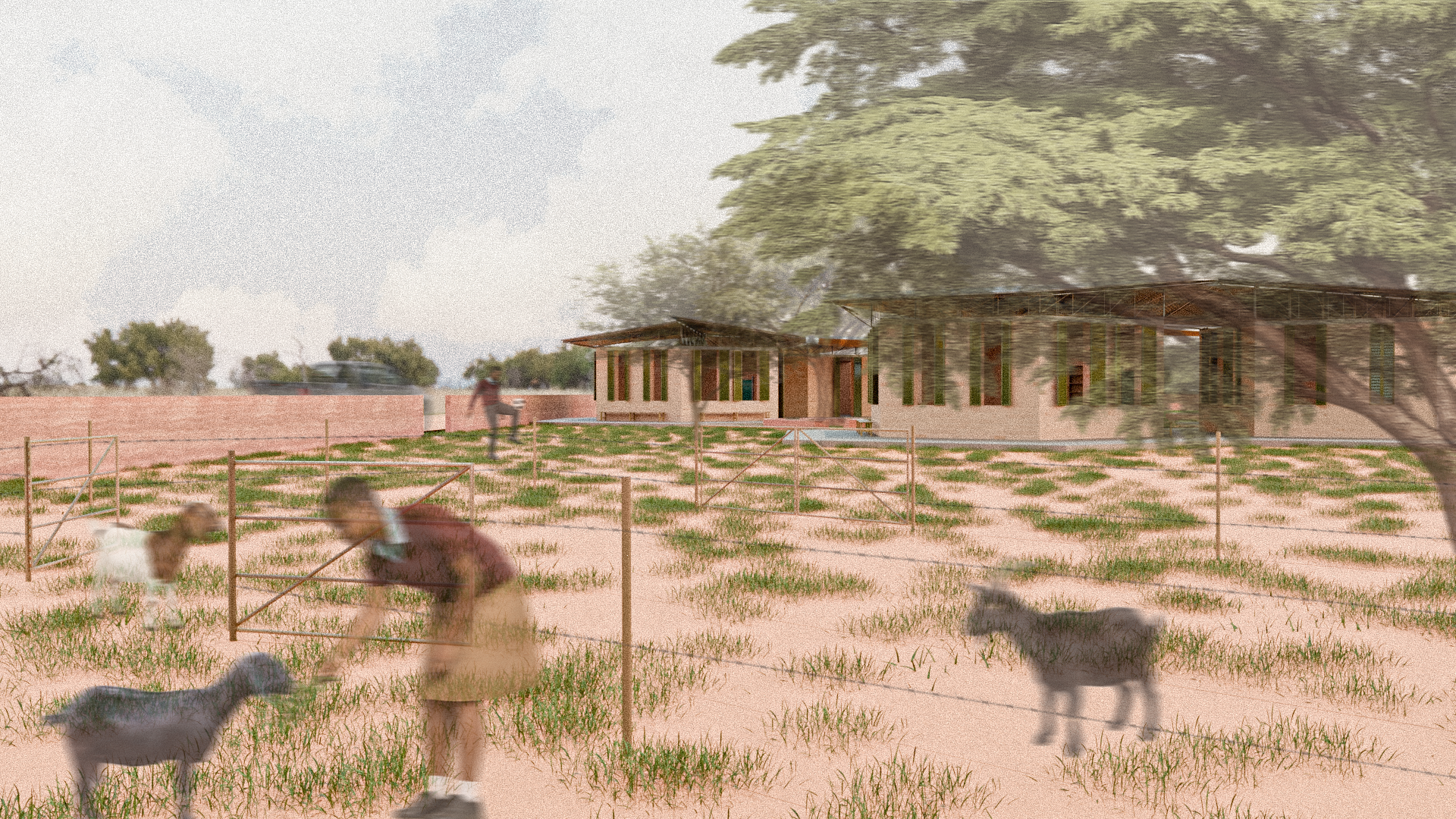
This school in rural Djilkah, Senegal, was designed as part of a competition. During the planning stage, we placed great emphasis on a low-tech design that could be realised using locally available materials and construction techniques. The school is organized around a hexagonal comb pattern derived from traditional Senegalese impluvium houses, which arrange their circular layouts around a central courtyard. This idea was reinterpreted in a modern hexagonal geometry oriented around existing trees that provide shade and shelter in the communal courtyard. The roofs are connected to create a coherent appearance, while the individual units remain modular and independent. The system allows for future expansion by adding further modules to the honeycomb structure.
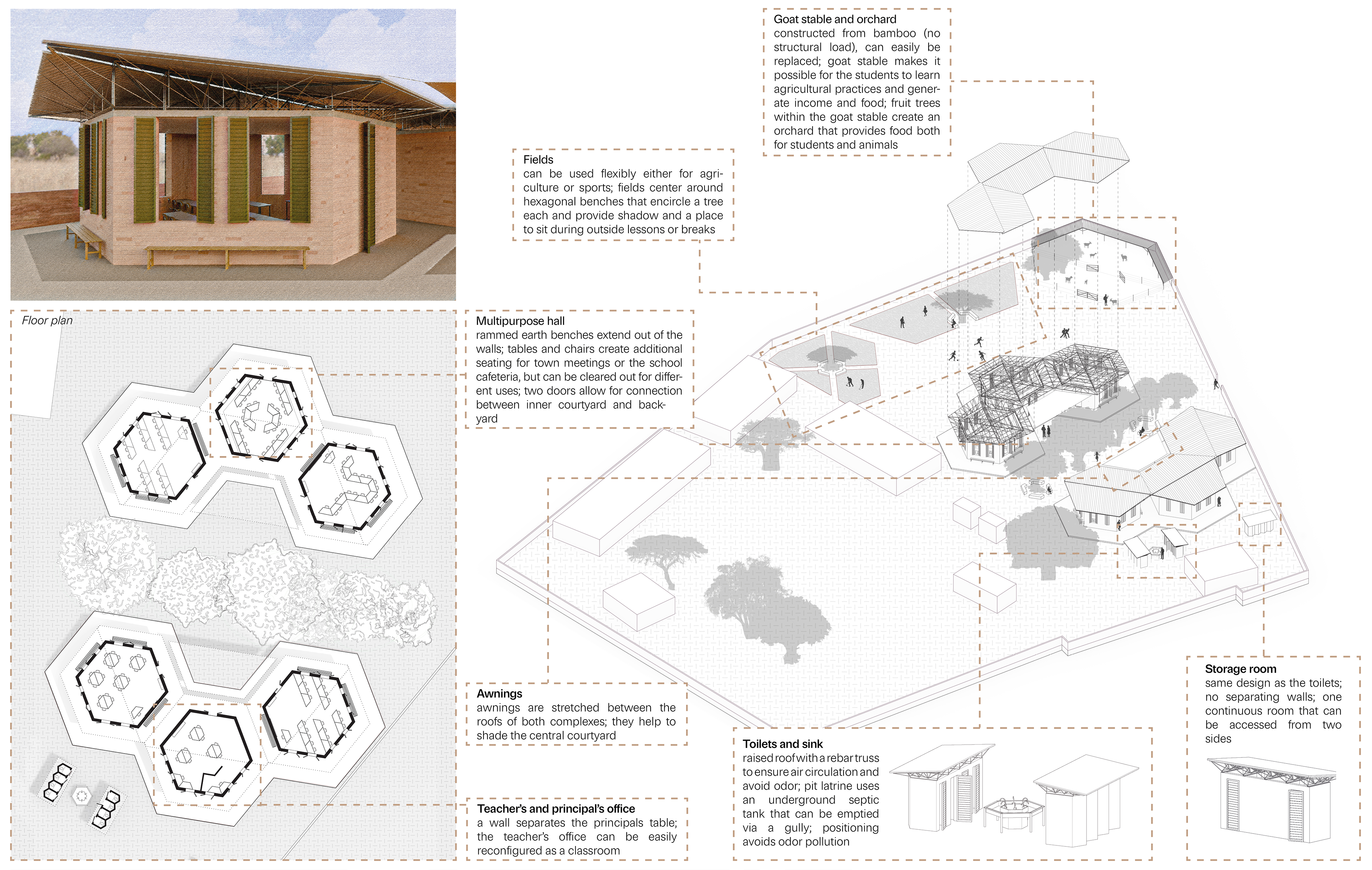
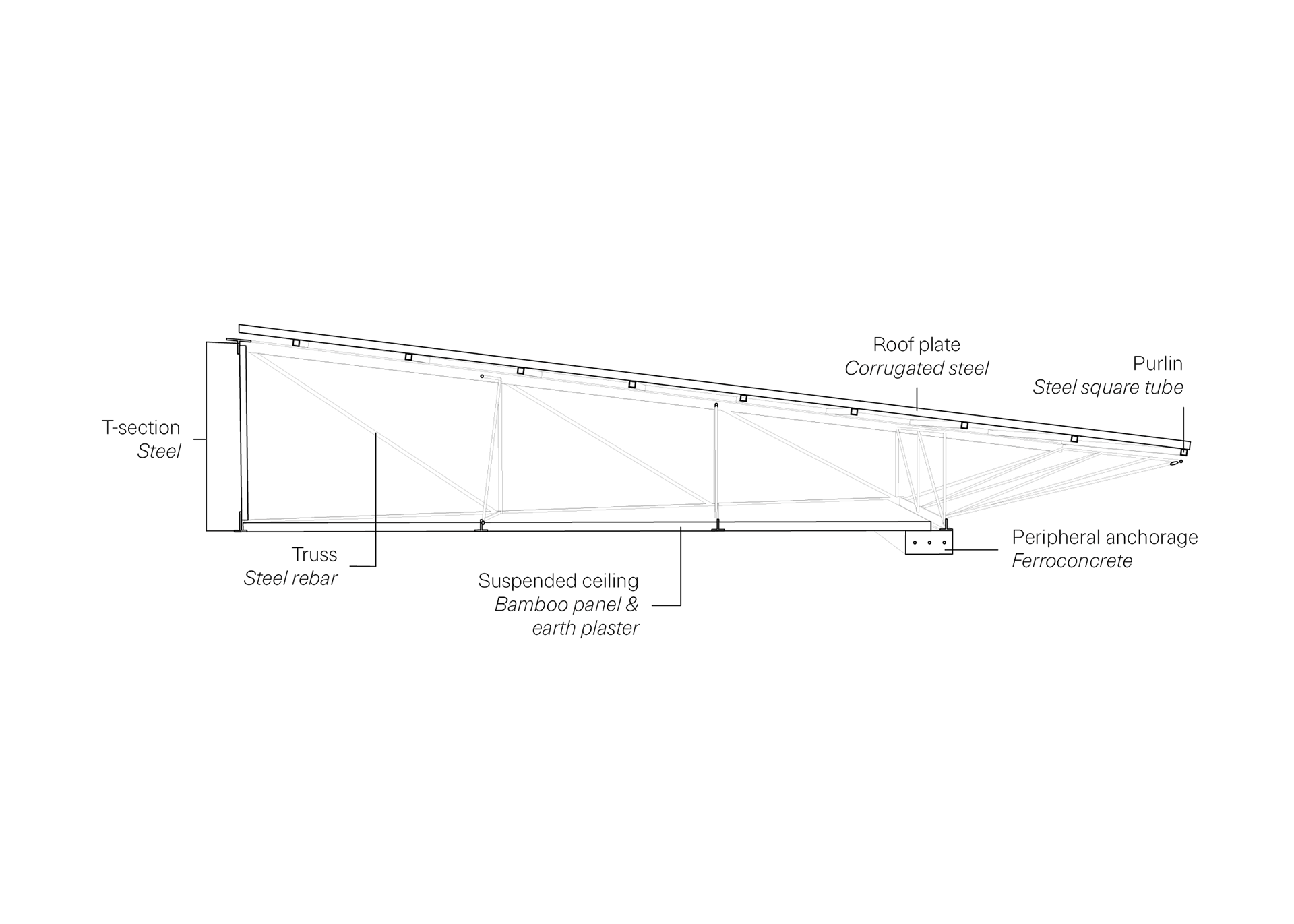
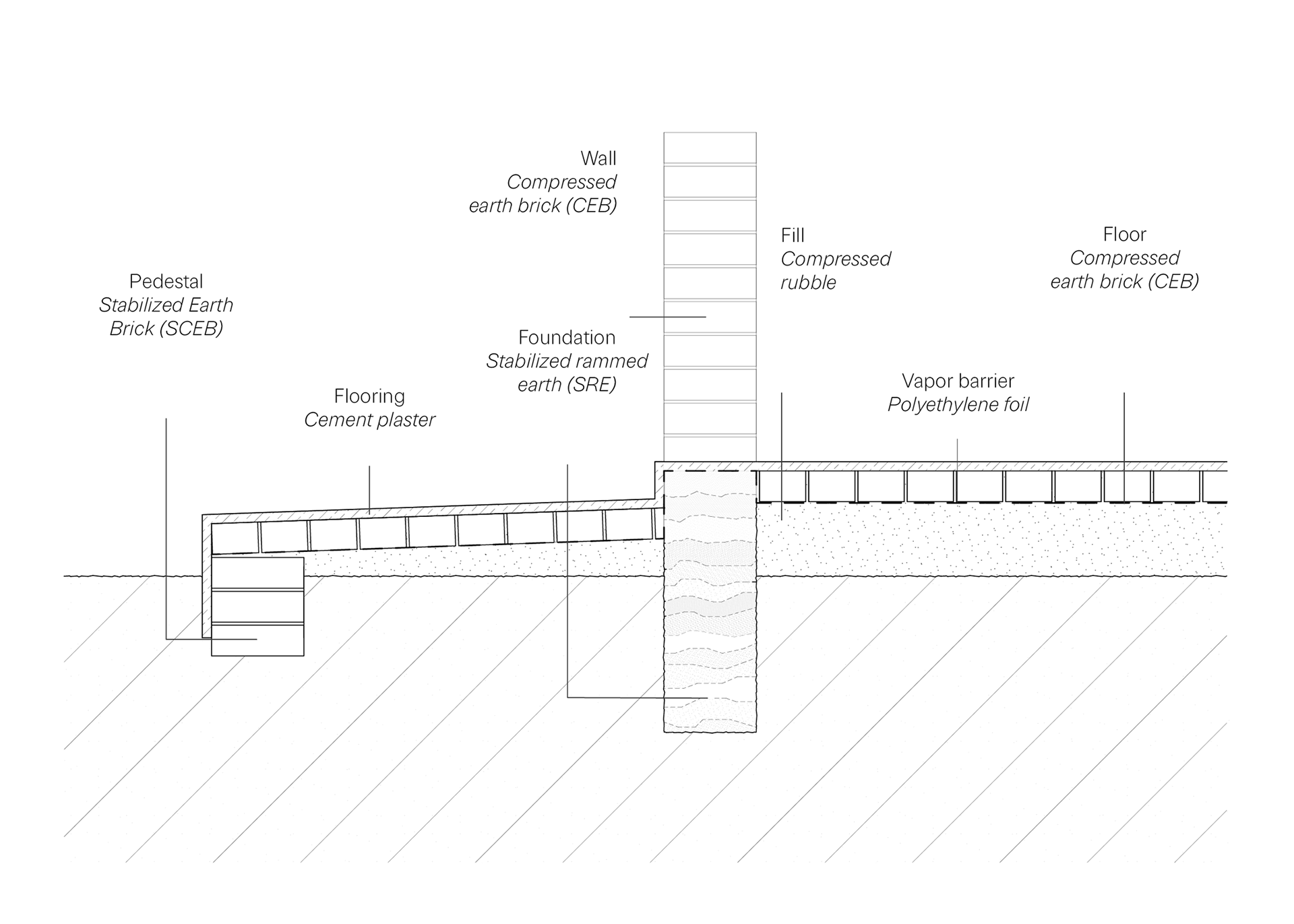
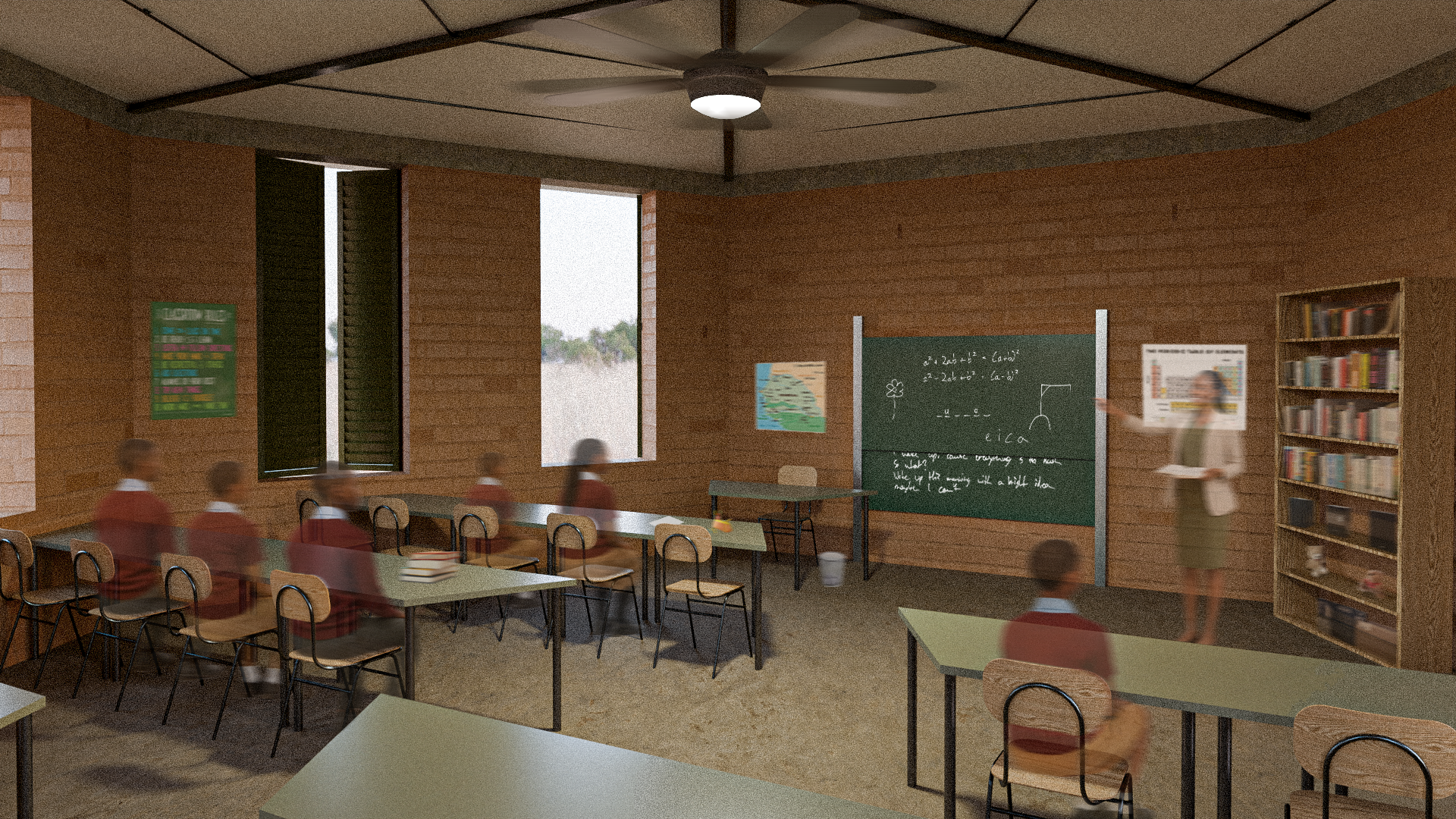
The building combines traditional local techniques with adapted modern construction methods. The walls consist of compressed earth bricks, manufactured in situ from locally sourced earth compressed in molds. Roof overhangs protect the bricks from rain and moisture. Both complexes are raised on a pedestal built with stabilized compressed earth bricks (SCEB), which are moisture-resistant and finished with cement plaster to form a durable floor. The roof structure uses steel T-sections welded to the purlins at the top and screwed into the peripheral anchorage at the bottom, arranged around a central pole. These elements are connected by a welded truss made of steel rebar. Between the truss, a suspended ceiling of bamboo panels plastered with earth creates room enclosure and reduces heat gain from the roof.
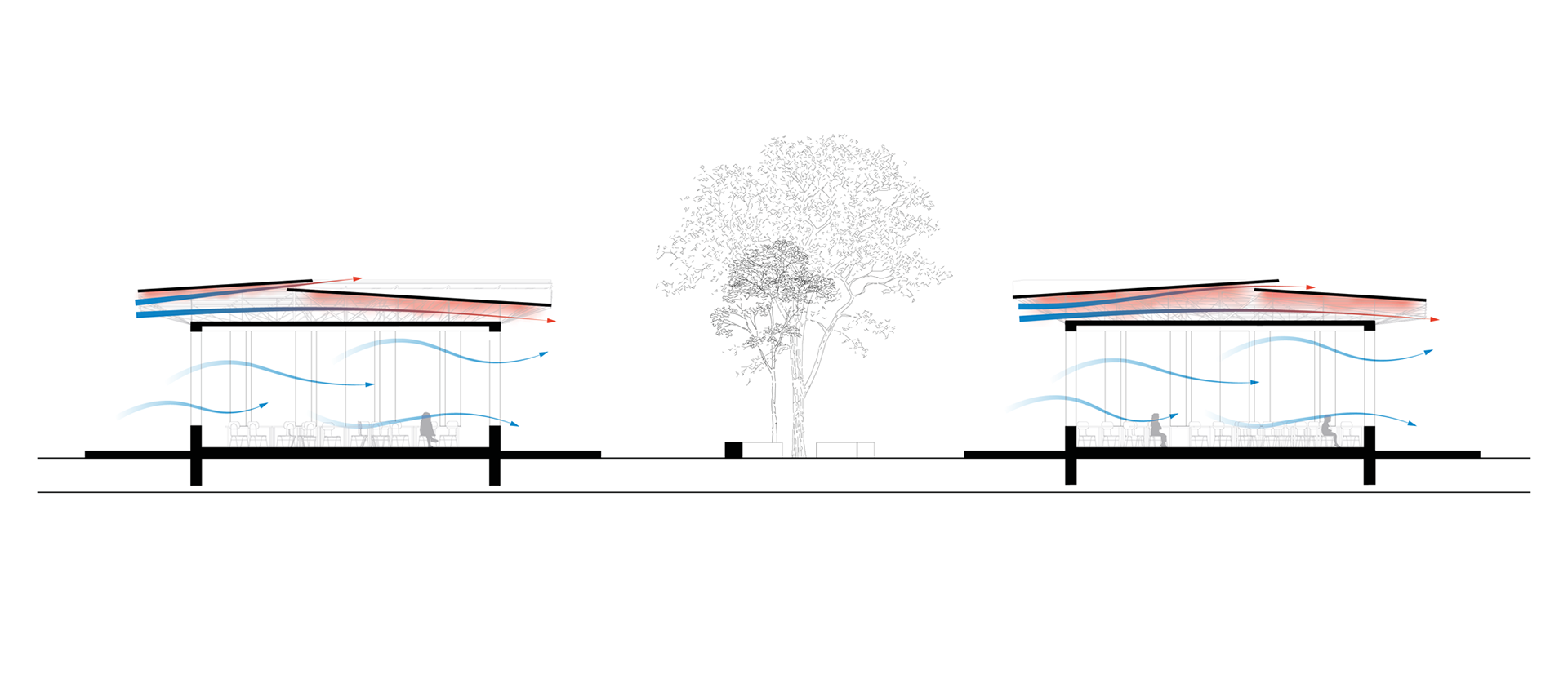
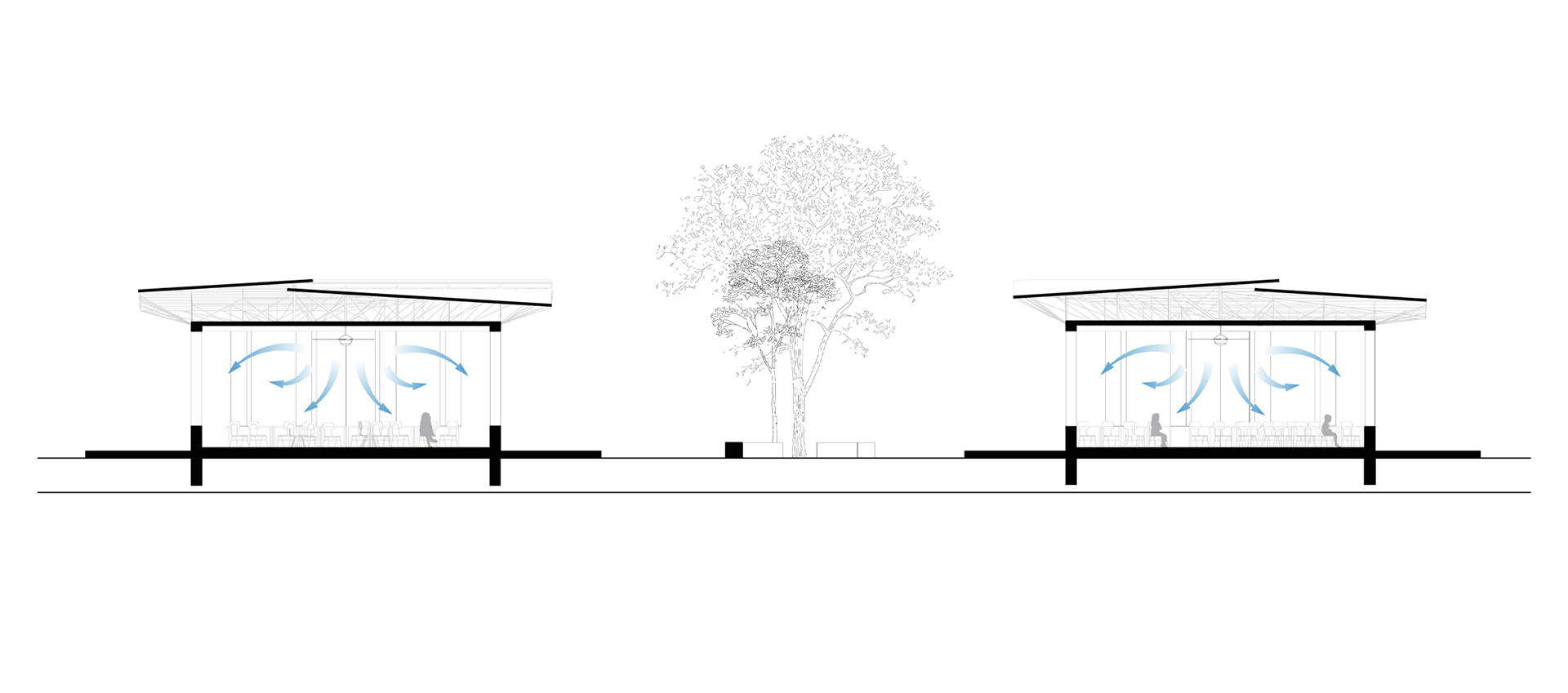
Many design decisions are driven by climatic and energetic considerations. The hexagonal geometry allows openings in multiple directions, while the raised roof and central opening prevent heat accumulation beneath the corrugated metal sheets. The roof is separated from the rooms by the suspended ceiling, enhancing the beneficial thermal properties of the earth walls. During the day, the earth bricks absorb heat and release it at night. Roof overhangs protect the interiors from direct solar radiation for most of the day. Direct sun hour analysis shows that solar radiation is significantly reduced below the awning and between the complexes. When exposed to direct sunlight, shutters still allow airflow, while also protecting against sand and dust and enabling the buildings to be secured at night.
Fifth semester, BSc. Architecture
TU Berlin
Natural Building Lab & Architektur, Gebäudetechnik und -systeme
Supervisor: Prof. Eike Roswag-Klinge, Prof. Angele Tersluisen
Project by Bela Mohr, Malte Heesen, Catalina Garciá-Serrano